
Implant Bridges
The Dental Implant & Sleep Centre in Melbourne has a team of highly qualified, certified, and experienced dentists who are ready to provide you with the best affordable dental treatment.

Who are Dental Implant Bridges for?
If you have two or more missing teeth due to an accident or old age receiving an implant bridge can help fill the gap naturally using artificial teeth. Some of the common causes of missing teeth include injuries from accidents, gum diseases, congenital conditions, and tooth decay.
An implant bridge is a personalised solution for replacing one or more teeth, consisting of crowns on either side of the gap to support the artificial teeth. This innovative dental prosthesis ensures the stability and proper alignment of the replacement teeth. By permanently restoring your bite, an implant bridge not only helps you maintain a natural facial appearance but also enhances your overall jaw health.
Types Of Dental Bridges
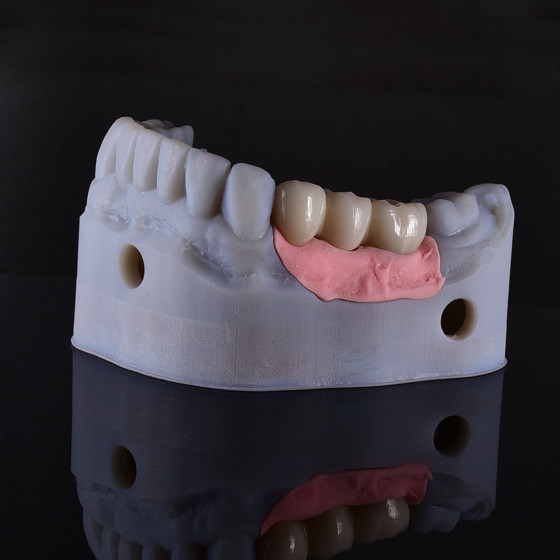
Fixed Bridge
A fixed bridge is one of the most common types of dental bridges. It consists of an artificial tooth (or pontic) held in place by two adjacent crowns that fit over your existing teeth on either side of the gap created by a missing tooth or teeth. The crowns will be custom-made to match your existing teeth, so they blend in seamlessly with your smile. This type of bridge is permanent and reliable, but it does require healthy adjacent teeth for support.
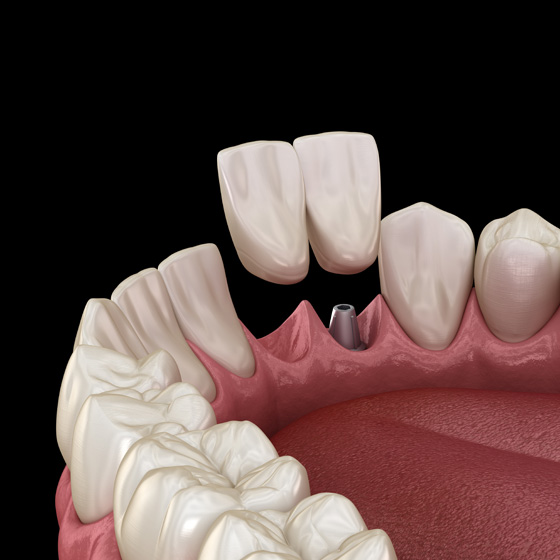
Cantilever Bridge
Similar to a fixed bridge, a cantilever bridge also consists of an artificial tooth and two crowns; however, unlike a fixed bridge, it only uses one crown to anchor the pontic in place instead of two. This type of dental bridge is typically used when only one adjacent tooth is available for support on one side, as opposed to both sides, like in a fixed bridge.
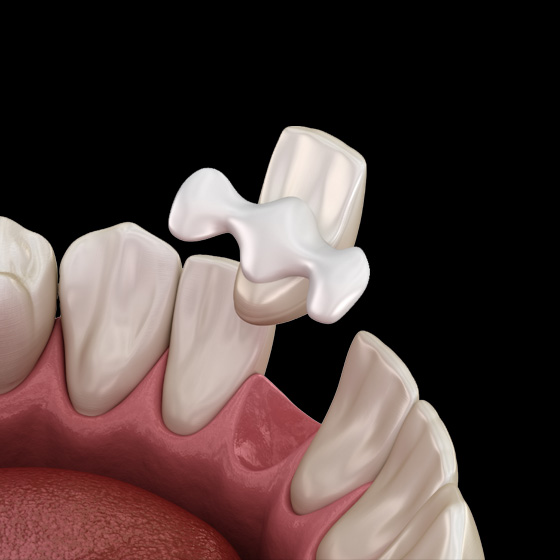
Maryland Bonded Bridge
Also called a resin-bonded bridge or Maryland bridge, this type of dental bridge uses metal wings on either side that attach to existing teeth with special bonding agents to hold the prosthetic tooth (or pontic) in place. A Maryland bonded bridge requires little preparation work since no grinding down or shaping is necessary for adjacent teeth before placement. This option is ideal for people who don’t want to alter their natural teeth too much. Of course, just like other types of bridges Maryland bonded bridges require healthy adjacent teeth for support to function properly.
Benefits of Getting a Dental Implant Bridge
Affordable option compared to other missing tooth procedures
Strong structure to support and withstand chewing and biting
Restores natural smiling, talking, and eating abilities without worrying about the dental prosthetic loosening or falling
Provides a natural function feel and look compared to any other dental implant options
Long-lasting natural solution for missing teeth
Preserves the bone
Better longevity and stability
Before & After a Dental Implant Bridge
Implant Bridge FAQs
Get the Best Dental Help
If you are not sure whether an implant bridge is the right option for you, feel free to give us a call or book an initial consultation with one of our experienced dentists today to find a suitable dental treatment.
Let our trained, caring and experienced dental clinicians and support staff help you regain your beautiful smile!
Payment Plans Available